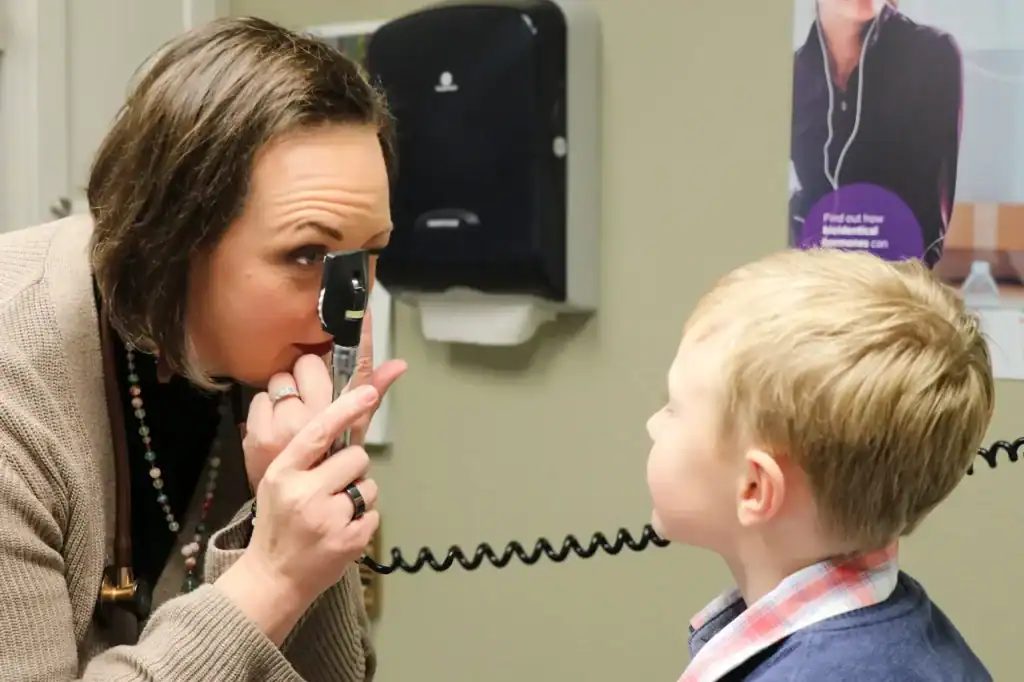
Safeguarding Children’s Eyes: Preventing Early Nearsightedness in
Find what may be keeping you stuck
In an age where children grow up surrounded by screens, early-onset nearsightedness—or myopia—has become a growing public health concern. What was once considered a teenage or adult issue is now being diagnosed in children as young as six or seven years old.
What’s Causing the Shift?
Myopia occurs when the eyeball elongates, causing light to focus in front of the retina instead of directly on it. This leads to blurred distance vision. Research links the rise in childhood myopia to excessive near work (like reading or screen time) and reduced outdoor exposure.
Children today spend hours each day on tablets, computers, and smartphones—activities that keep their eyes fixed at a close range. Meanwhile, time spent outdoors—where the eyes naturally focus at varying distances and benefit from sunlight—is steadily decreasing.
Why It Matters
Early myopia doesn’t just mean thicker glasses. It increases the risk for serious eye diseases later in life, including retinal detachment, glaucoma, and macular degeneration.
How Parents Can Protect Their Child’s Vision
- Encourage outdoor play: Just 2 hours of natural light daily can reduce myopia risk.
- Use the 20-20-20 rule: Every 20 minutes of near work, look at something 20 feet away for 20 seconds.
- Promote balanced screen habits: Set screen-free times, especially before bed.
- Prioritize nutrition: Foods rich in lutein, vitamin A, zinc, and omega-3s support eye health.
- Schedule yearly eye exams: Early detection allows for lifestyle and lens interventions that can slow progression.
Protecting children’s vision isn’t about limiting their opportunities—it’s about helping them see the world clearly, now and for years to come.
Ready for a more personalized next step?

Dr. Regan Tilley
Medical disclaimer: Articles from WHOLEhealth MHK are for educational purposes only and do not create a physician-patient relationship. They are not intended to diagnose, treat, cure, or prevent any condition. Please consult a qualified clinician for personalized medical advice.
Share:
More from Dr. Regan
5 Hard Truths I’ve Learned After a Decade in Functional Medicine

Perimenopause, Libido Changes, and Your Man Has Low T