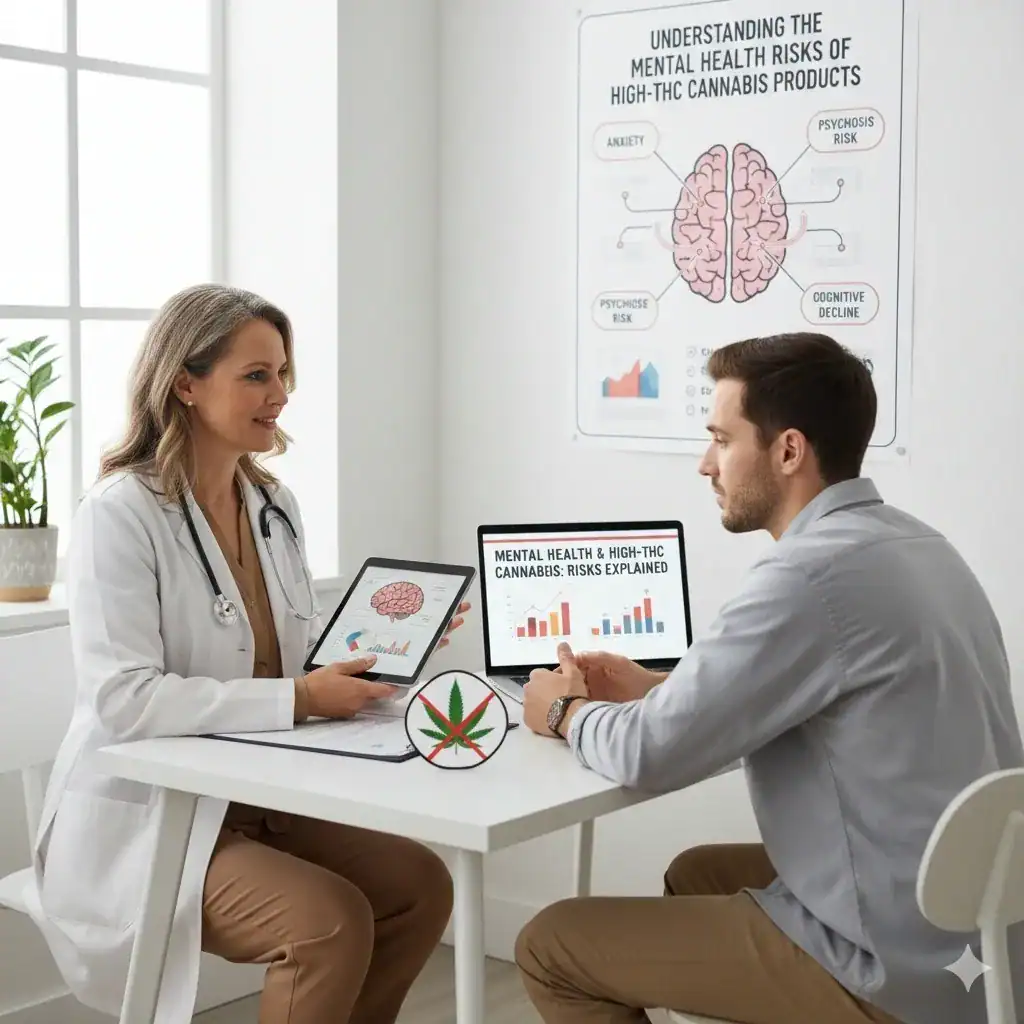
Mental Health Risks of High-THC Cannabis: What You Should Know
Find what may be keeping you stuck
Cannabis has gained wide acceptance for its therapeutic potential, from easing chronic pain to improving sleep. However, the rise of high-THC cannabis concentrates—products with far greater potency than traditional marijuana—has raised new mental health concerns.
The Science Behind THC
THC (tetrahydrocannabinol) is the psychoactive component that creates the “high.” Decades ago, cannabis contained about 3–5% THC. Today’s concentrates and vapes can exceed 80–90% THC, altering brain chemistry in profound ways.
Mental Health Impacts
Clinical research suggests that high doses of THC can:
- Trigger acute psychosis (hallucinations, paranoia, or disconnection from reality)
- Increase the risk of schizophrenia or other psychotic disorders in genetically vulnerable individuals
- Lead to cannabis use disorder, marked by dependence and withdrawal symptoms
- Aggravate anxiety and depression
These risks are particularly high in adolescents and young adults, whose brains are still developing.
What to Keep in Mind
Functional wellness emphasizes moderation and awareness. For those exploring cannabis use:
- Choose lower-THC, higher-CBD products to balance effects.
- Avoid use during adolescence.
- Seek professional guidance if using cannabis for chronic pain or mental health.
As with any substance, understanding the root cause of your symptoms is key. Cannabis should support healing—not replace it.
Ready for a more personalized next step?

Dr. Regan Tilley
Medical disclaimer: Articles from WHOLEhealth MHK are for educational purposes only and do not create a physician-patient relationship. They are not intended to diagnose, treat, cure, or prevent any condition. Please consult a qualified clinician for personalized medical advice.
Share:
More from Dr. Regan

5 Hard Truths I’ve Learned After a Decade in Functional Medicine

Perimenopause, Libido Changes, and Your Man Has Low T