Kids and Rashes
Find what may be keeping you stuck
Understanding Chickenpox and Common Childhood Rashes: A Quick Guide for Parents
As parents, it’s natural to worry when your child develops a rash or a fever. While many rashes are harmless and resolve on their own, some can be more concerning. Chickenpox, for example, is a well-known viral rash, but it’s not the only one parents should be aware of. This guide will cover chickenpox and a few other common viral rashes, their symptoms, timelines from exposure to resolution, and tips on managing fever and caring for your child at home.
Chickenpox (Varicella)
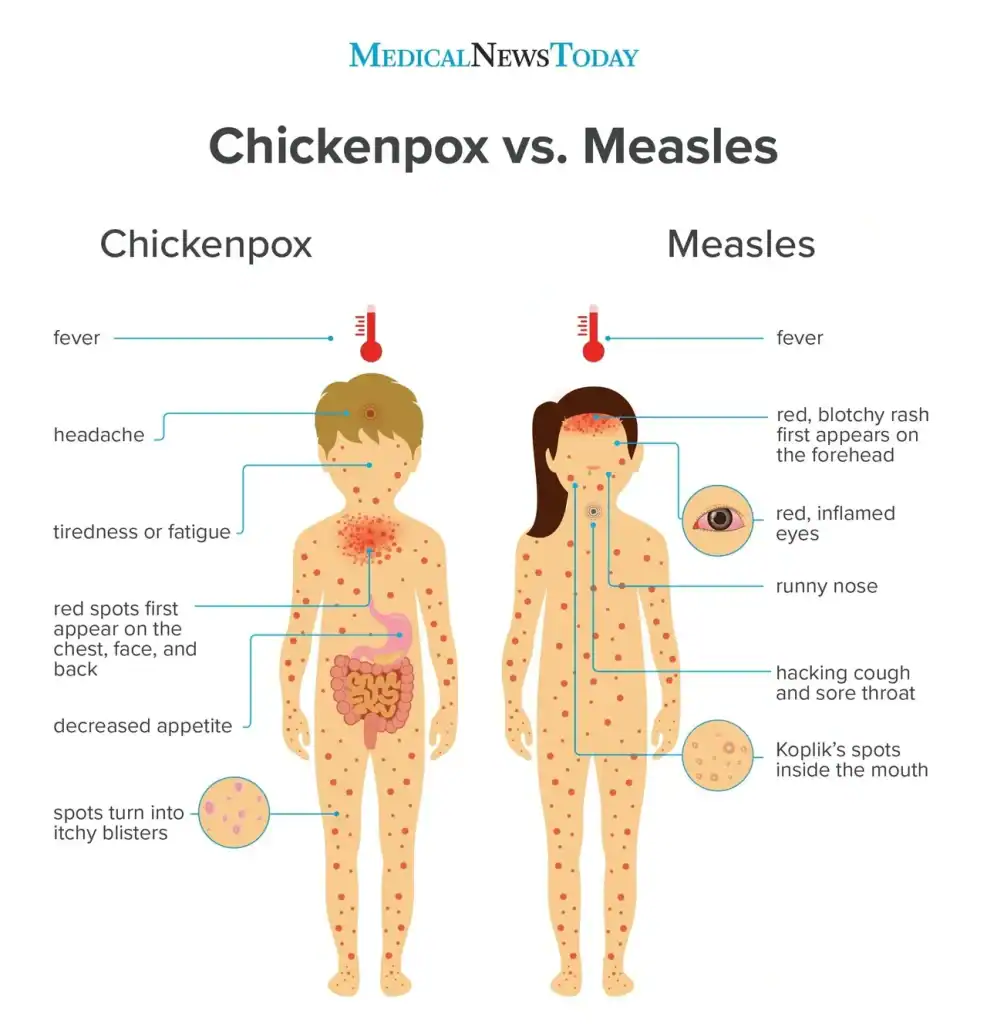
Chickenpox is caused by the varicella-zoster virus. It’s characterized by an itchy rash that turns into fluid-filled blisters. The rash usually starts on the chest, back, and face, and then spreads to the rest of the body. Other symptoms may include fever, fatigue, and loss of appetite. Chickenpox is highly contagious and spreads through direct contact with the rash or respiratory droplets.
Timeline:
Exposure to Symptoms: 10-21 days
Rash Duration: About 5-10 days
Resolution: Most children recover fully within 1-2 weeks after the rash appears.
Symptoms:
Itchy red spots or blisters
Fever
Fatigue
Loss of appetite
Measles (Rubeola)
Measles is a highly contagious viral infection that starts with cold-like symptoms such as a runny nose, cough, and red eyes. A high fever is common, and a distinctive rash appears a few days later. The rash starts on the face and spreads downward to the rest of the body.
Timeline:
Exposure to Symptoms: 7-14 days
Rash Duration: 4-7 days
Resolution: Symptoms usually resolve within 10-14 days, but complications can extend recovery.
Symptoms:
High fever
Cough, runny nose, and red eyes
Koplik spots (small white spots inside the mouth)
Red rash that starts on the face and spreads
Rubella (German Measles)
Rubella is a mild viral illness that can be more serious for pregnant women. It begins with a mild fever and swollen lymph nodes, followed by a pinkish-red rash that usually starts on the face and spreads downward. The rash typically lasts for three days.
Timeline:
Exposure to Symptoms: 14-21 days
Rash Duration: 3 days
Resolution: Most children recover fully within a week.
Symptoms:
Mild fever
Swollen lymph nodes
Pinkish-red rash that starts on the face
Roseola (Sixth Disease)
Roseola is a viral illness that commonly affects young children. It typically starts with a sudden high fever that lasts for several days. After the fever subsides, a rash appears, usually starting on the chest and back before spreading to the limbs.
Timeline:
Exposure to Symptoms: 5-15 days
Fever Duration: 3-5 days
Rash Duration: 1-2 days after fever resolves
Resolution: Full recovery usually occurs within a week.
Symptoms:
Sudden high fever (may reach 104°F)
Rash that appears after the fever subsides
Fifth Disease (Erythema Infectiosum)
Fifth Disease is a mild viral infection that causes a distinctive red rash on the face, often called a “slapped cheek” appearance. The rash may spread to the body, and mild flu-like symptoms may accompany it.
Timeline:
Exposure to Symptoms: 4-14 days
Rash Duration: 1-3 weeks
Resolution: Most children recover fully within 1-3 weeks.
Symptoms:
Bright red rash on the cheeks
Low-grade fever
Mild flu-like symptoms
Treating Fevers and Managing Symptoms
If your child has a fever of over 102°F and is feeling poorly, you can use fever reducers such as acetaminophen (Tylenol) or ibuprofen (Advil) to help bring the fever down and make your child more comfortable. Always follow the dosing instructions on the medication label or as directed by your healthcare provider.
Encourage Hydration
Keeping your child hydrated is crucial, especially when they have a fever. Offer water, oral rehydration solutions, or clear broths to prevent dehydration. If your child is refusing fluids or showing signs of dehydration (such as dry mouth, no tears when crying, or infrequent urination), contact your healthcare provider.
Limiting Exposure
If your child has a viral rash, it’s important to limit their exposure to others to prevent the spread of the illness. Keep your child home from school or daycare until they are no longer contagious, and avoid contact with pregnant women, infants, and people with weakened immune systems.
When to Seek Medical Attention
While most childhood rashes and fevers can be managed at home, seek medical attention if:
The fever persists for more than three days
Your child is unusually drowsy or irritable
The rash spreads rapidly or looks infected
Your child shows signs of dehydration
Understanding these common viral rashes and how to manage them can help you feel more confident in caring for your child. Always consult your healthcare provider if you have any concerns or if symptoms worsen.
By staying informed and prepared, you can help your child feel better faster and reduce the risk of spreading these illnesses to others.
Ready for a more personalized next step?

Dr. Regan Tilley
Medical disclaimer: Articles from WHOLEhealth MHK are for educational purposes only and do not create a physician-patient relationship. They are not intended to diagnose, treat, cure, or prevent any condition. Please consult a qualified clinician for personalized medical advice.
Share:
More from Dr. Regan
5 Hard Truths I’ve Learned After a Decade in Functional Medicine

Perimenopause, Libido Changes, and Your Man Has Low T